Description
Salsa Solo
Cuban salsa is based in particularly on Cuban son: a music and dance style from the early 20th century that combines African rhythms (e.g., clave, call and response structure, percussion instruments) and Spanish melodic influences (e.g., guitars, singing). Cuban salsa is a rich mix of music and movement, with influences from Cuban rumba, mambo, cha-cha-chá, and other Cuban and Afro-Cuban rhythms and dances.
Salsa is a happy and energetic dance where the main thing is to have fun to the rhythm of catchy music.
Couple Salsa
Cuban couple salsa is an energetic and joyful social dance. In the classes, you will learn the rhythms, steps, body movements, and styling of salsa, as well as the typical patterns used in Cuban salsa. A defining feature of Cuban salsa is its circular movement (as opposed to linear salsa, where the movement takes place mainly straight forward and backward along a line).
Cuban salsa is a social dance, meaning that it is danced freely with different partners, without any pre-arranged choreography. In class, students learn the skills of leading and following—that is, how dancers communicate through movement: the leader guides the dance through subtle body movements and hand signals, while the follower responds to them naturally. This allows for improvisation, being present in the moment, and dancing with anyone—even if you have never practised together before.
The call-and-response structure, a dialogue of invitation and response rooted in African tradition, is present in Cuban salsa through the rhythms of the music, the singing, and the playful, reactive dialogue between the dancers. Call and response originates in African musical traditions, where one person sings or plays a phrase (the call) and others answer (the response). This can be found throughout Afro-Cuban music, for example in son and rumba.
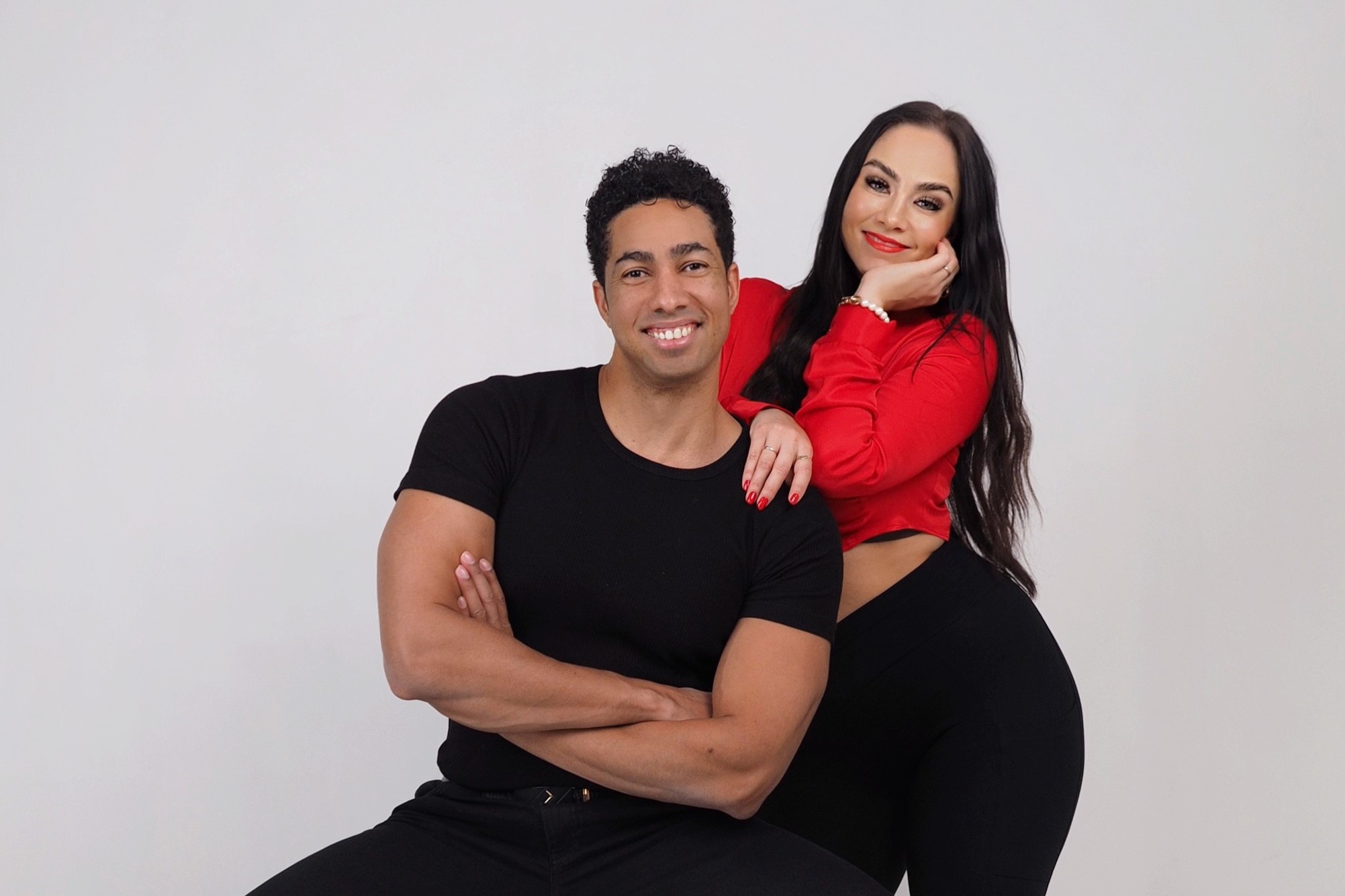
Roynet Perez
Roynet comes from Cuba’s Havanna, the birth place of salsa. His passion for dance was ignited early on, and his career as a dancer began in 2003. Roynet became soon the champion of Cuban couple salsa, in Cuba as well as in other parts of the world. In his home country, he is still known as “Monarca del casino”. Roynet has won inter alia European Championship of Cuban Salsa in 2010.
Satu Annika
Satu is a dancer and dance teacher from Tampere and she has been dancing all her life. She started dancing Hip Hop and later moved to Latin dances. Satu’s dearest love is Salsa, and she trains both abroad and in Finland. Satu has also spent a year in Italy by learning from the world-famous Cuban dancer Yeni Molinet and dancing in her show group. Over the years, Satu has acquired a strong dance technique, seasoned with an elegant dance style.
More information about the workshops: info@flama.fi